%20--%3e%3cpath%20d='M200.3,58.2c-2.5-2.5,1.1-6.8,3.3-4.2s-.9,6.5-3.3,4.2Z'/%3e%3ccircle%20cx='25.7'%20cy='49.3'%20r='2.4'/%3e%3cpath%20d='M87.2,63.9c0,0,.3.7.4.6,1.3-.9,3.4-4.2,4.8-4.4s3.2,1.2,2.8,3-5.6,5.5-6.7,7.5c0,.6,1.7,5.3,2.1,5.6,1.2,1.1,3.9-.8,4.7-1.8,3.4-4,6.1-10.1,8-15s2.1-6.4,3.6-9.4c-3.1-1.4-7.2-.7-9.7,1.5-1.5,1.2-3.2,4.4-5.3,1.5s3.2-6.2,5.3-7.2c3.8-1.8,7.7-1.6,11.7-.5,1.1-2,1.5-7.7,5-5.4s.3,4-.1,5.9-.2.4.1.6c4.3.7,9,2.7,13.1.6s2.2-1.9,3.2-3.8,3.1-2.4,4.2-.4-1.3,5.6-3.1,7c-5.8,4.8-12.8,2.4-19.4.9l-.4.2-5,13c-.6,2.2-.7,9.6.2,11.6,1.9,4.3,7.3-1.4,8.9-3.3s1.8-2.3,1.5-2.8c-4.3-2.6-4-10.8.9-12.5,5.7-2.1,7.3,4.9,5.7,9,2.6.3,8.2-5.3,10-1.8s-.5,2.6-1.1,4.1-1.6,6.5-.3,7.5,3.9-1.3,5.1-1.8c-.2-4.1,1.3-8.8,4.6-11.3s10-1.3,8.4,4.9-4.5,6.1-7.1,8.5c1.3.1,2.6-.7,3.6-1.5,3.5-2.8,8.1-10.8,12.4-11.6s4.6,2.9,4.8,5.3c2.4-4.9,8.9-7.6,12-1.8,2.3-2.8,6.2-5.7,9.6-2.9s0,10.1-1,14,0,.5.4.4c.8-.2,2.6-1.7,3.2-2.3,2.2-1.9,4.6-4.9,6.1-7.4s2.1-6.5,4.6-6c4.1.7.4,6.7-.2,9s-1.2,5.3,0,7.5c1.5.3,7.7-4.8,8.9-6.1s1.8-2,2-2.5c.6-1.2-.6-1.9-1.1-3-1-2.1-1.5-4.7-.2-6.8,1.9-3,5.7-2.3,7.1.8s.4,5.6.1,8.1l2.7,4.7c2.4-1.3,5.6-2.1,8.4-2.3s7.2-.3,8.5.8,1,3.6-1,4.1-5.2-.2-7.3,0-5.3.9-6,1.5,0,1.6.1,2.4c0,1.2.1,2.4-.4,3.5-1.8,3.4-7.4,3.1-8.4-.7s1-4.4,2.3-6.3l-1.5-3.1c-3.2,3.3-10.1,10.3-15.1,9.7s-4.5-3.5-4.4-6.2c-2.6,2.5-7.7,7.4-11.6,5.2s.7-11,.6-15.2c-.2-.2-2,1.2-2.2,1.4-2.3,2.1-3.8,5.4-5.1,8.2s-1.6,5-2.6,5.7c-1.7,1.2-3.5,0-3.8-1.9l2.7-9.7c0-.8.1-1.7,0-2.5s-.8-.4-1.3-.3c-3.3,1.2-5.8,10.8-7.8,13.5s-4.5,1.5-4.7-1,1.1-6.2,1.2-8.5,0-2.6,0-3.9c-4.6,3.6-9.4,13.2-16.1,12.5-1.4-.2-3-1.1-3.8-2.3-3.3,1.8-7.2,3.9-10.4.6s-2.2-6.1-1.8-9.1l-5.2,1.1c-2.7,4.8-9.3,12.9-15.6,10.4s-4.9-4.9-4.6-8c-2.1,2.5-3.3,5.3-6.4,6.7-5.4,2.5-9.1-.5-10.5-5.7-3.9,3.4-7.7,7.8-13.5,7.2s-3.9-1.6-5.3-3.2c-2.9,1.9-6.4,4.5-9.3,1.1s.8-12.1-1.1-16.6c-1.8-.3-5.1,6.4-5.9,7.8s-1.8,2.5-2.5,3.8-1.5,4.4-2.5,5c-1.4.9-4.2-.5-4.6-2.1l-.4-10.1-.5-3.6c-1.6,2.9-2.9,6-4.6,8.7s-5.9,8.3-8.6,9.1c-7.4,2.2-7.6-6.5-7.2-11.4s2.7-11.5,4.1-13.9,4-1.4,4.4.5-1.7,6-2.3,7.9-1.4,4.8-1.4,5.3v6.8l.4.4c.3,0,.6,0,.9,0,.9-.3,4.7-5.2,5.4-6.3,2.1-3.1,5.7-12.5,9.5-13.3,5.5-1.1,4.5,9.6,4.8,12.7l3.4-5.7c1.4-2.1,3.9-5.6,6.5-6,6.8-.9,6.6,7,6.4,11.6s-1.2,6.3-.3,6.4c.8-.1,4-2.2,4.2-2.8.4-.9.5-3.5.8-4.7,1.1-4.7,5.6-12.4,11.5-9.5s-.9,10.1-3.3,12.8-3.4,3.1-3.5,3.3c-.2.9,1.3,1.6,2.1,1.6,4,.2,8.5-5.3,11-8,.3-.7-.6-5.1-.6-6.4,0-2.1-.5-6.9,3-5.8s1.7,1.6,1.7,2.3c0,1.3-.2,3.3,0,4.5ZM70.8,68c.6-.2,2.9-3.5,2.7-3.7-1.4.6-2.5,2.3-2.7,3.7ZM142.8,70.2c.9-.1,3.4-3.5,3-4-1,0-3.4,3.4-3,4Z'/%3e%3c/svg%3e)
04. Institutional Audiences Are Not Corporate Targets
An institutional audience does not merely receive a message. It judges the appropriateness of a posture.
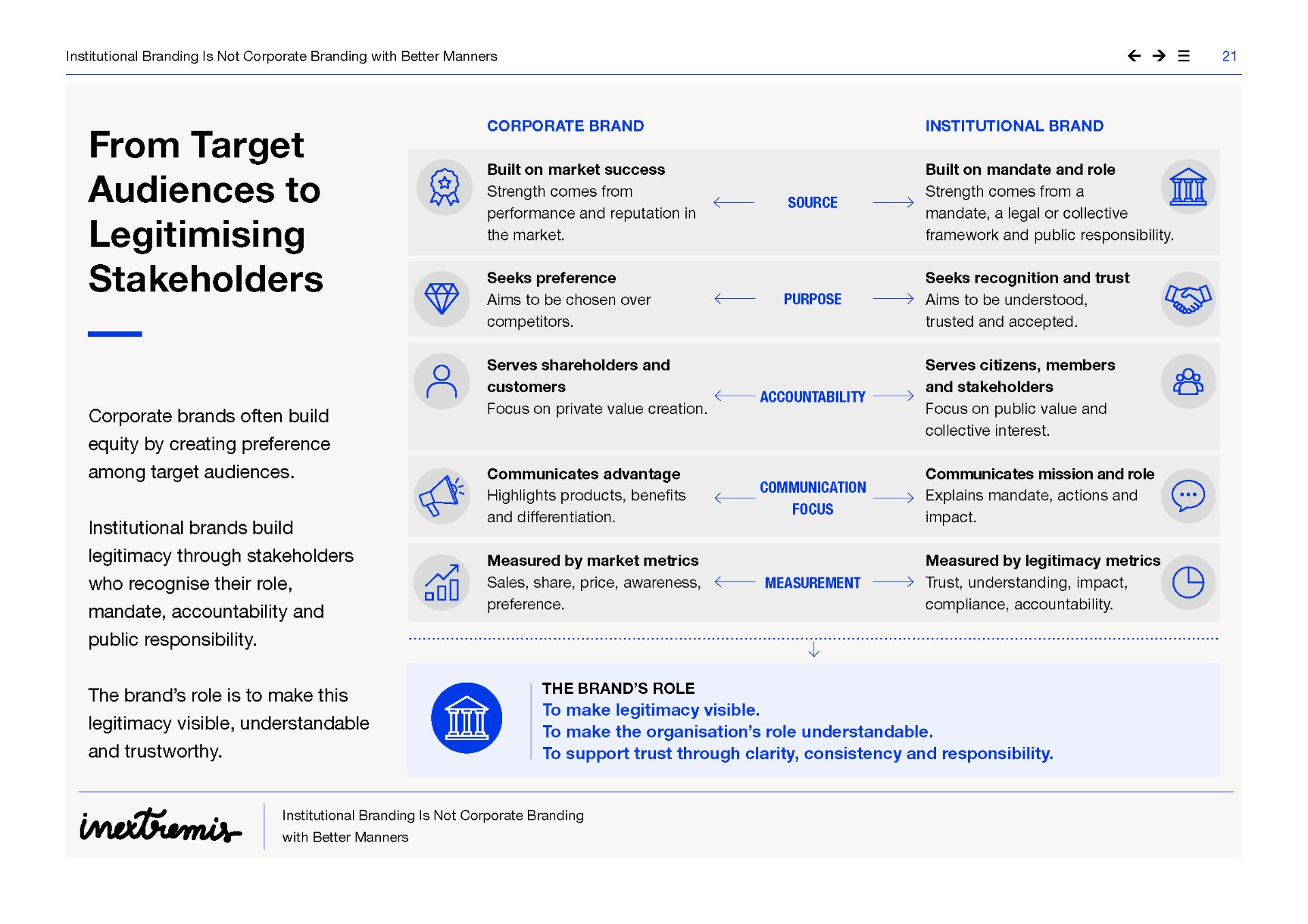
Corporate branding often thinks in terms of targets: customers, prospects, talent, investors, influencers, partners, opinion leaders. These categories are useful. They make it possible to adapt messages, channels, offers and experiences. But in the European institutional world, the idea of a target becomes insufficient.
A European institution or association does not simply speak to audiences it wants to convince. It operates before, with and sometimes under the scrutiny of stakeholders who interpret, assess, challenge, relay, co-produce or legitimise its action.
An institutional audience can be, at the same time, a beneficiary, citizen, member, funder, partner, expert, regulator, decision-maker, relay, critic or opponent. It does not merely receive a message. It judges the appropriateness of a posture.
The European Commission explicitly links the participation of citizens and stakeholders to the process of developing policies and laws. Its pages on consultations state that increasing the participation of citizens and stakeholders is an important objective of the Better Regulation agenda. Citizens and stakeholders can contribute through consultations, feedback, implementation dialogues and calls for evidence.
This framework profoundly transforms communication. The organisation does not simply address audiences. It acts within a space where its voice can invite response, evidence, participation, scrutiny and contestation.
An institutional brand must be credible for heterogeneous audiences who do not read the organisation in the same way.
It must speak to experts without excluding non-specialists. It must be accessible without being simplistic. It must carry a vision without erasing nuance. It must represent a collective without becoming vague. It must be clear enough for the general public, precise enough for decision-makers, stable enough for members, serious enough for partners and transparent enough for funders.
In corporate branding, the brand can seek to influence a decision journey. In institutional branding, it must organise a relationship of trust within an ecosystem. That is very different.
European associations embody this tension particularly clearly. Their members are not merely internal audiences. They are part of their legitimacy. An association that talks too much about itself may seem to detach itself from its base. An association that disappears too much can no longer exist as a credible European voice. Branding must therefore give form to a collective voice without crushing the diversity of those it represents.
If institutional audiences are not corporate targets, design cannot simply be an attention-capture machine. It must become an engine for organising understanding. It must structure several levels of reading: quick reading, expert reading, political reading, member reading, partner reading and citizen reading.
It must clarify who is speaking, on whose behalf, with what authority and within what framework. In concrete terms, this affects information hierarchy, headlines, subtitles, executive summaries, data visualisations, pictograms, navigation systems, report covers, presentation templates, event pages, social posts, signatures and co-branding rules.
In an institutional brand, coherence should not produce uniformity. It should enable adaptation without fragmentation.
The real question is therefore not only: how can we target better? It is: how can we govern relationships with multiple stakeholders better? A corporate target can be activated. An institutional stakeholder must be recognised in their role.
What This Means in Practice
- ●Design for layered reading.
A publication should work for a quick reader, a policy expert, a member, a journalist and a decision-maker.
- ●Use subtitles and summaries as navigation tools.
They should help different audiences find their way through complex content.
- ●Avoid one-size-fits-all messaging.
The same brand can speak with different levels of technicality depending on the context.
- ●Make stakeholder roles visible.
When members, partners, funders or citizens are involved, the communication should clarify their place in the story.