%20--%3e%3cpath%20d='M200.3,58.2c-2.5-2.5,1.1-6.8,3.3-4.2s-.9,6.5-3.3,4.2Z'/%3e%3ccircle%20cx='25.7'%20cy='49.3'%20r='2.4'/%3e%3cpath%20d='M87.2,63.9c0,0,.3.7.4.6,1.3-.9,3.4-4.2,4.8-4.4s3.2,1.2,2.8,3-5.6,5.5-6.7,7.5c0,.6,1.7,5.3,2.1,5.6,1.2,1.1,3.9-.8,4.7-1.8,3.4-4,6.1-10.1,8-15s2.1-6.4,3.6-9.4c-3.1-1.4-7.2-.7-9.7,1.5-1.5,1.2-3.2,4.4-5.3,1.5s3.2-6.2,5.3-7.2c3.8-1.8,7.7-1.6,11.7-.5,1.1-2,1.5-7.7,5-5.4s.3,4-.1,5.9-.2.4.1.6c4.3.7,9,2.7,13.1.6s2.2-1.9,3.2-3.8,3.1-2.4,4.2-.4-1.3,5.6-3.1,7c-5.8,4.8-12.8,2.4-19.4.9l-.4.2-5,13c-.6,2.2-.7,9.6.2,11.6,1.9,4.3,7.3-1.4,8.9-3.3s1.8-2.3,1.5-2.8c-4.3-2.6-4-10.8.9-12.5,5.7-2.1,7.3,4.9,5.7,9,2.6.3,8.2-5.3,10-1.8s-.5,2.6-1.1,4.1-1.6,6.5-.3,7.5,3.9-1.3,5.1-1.8c-.2-4.1,1.3-8.8,4.6-11.3s10-1.3,8.4,4.9-4.5,6.1-7.1,8.5c1.3.1,2.6-.7,3.6-1.5,3.5-2.8,8.1-10.8,12.4-11.6s4.6,2.9,4.8,5.3c2.4-4.9,8.9-7.6,12-1.8,2.3-2.8,6.2-5.7,9.6-2.9s0,10.1-1,14,0,.5.4.4c.8-.2,2.6-1.7,3.2-2.3,2.2-1.9,4.6-4.9,6.1-7.4s2.1-6.5,4.6-6c4.1.7.4,6.7-.2,9s-1.2,5.3,0,7.5c1.5.3,7.7-4.8,8.9-6.1s1.8-2,2-2.5c.6-1.2-.6-1.9-1.1-3-1-2.1-1.5-4.7-.2-6.8,1.9-3,5.7-2.3,7.1.8s.4,5.6.1,8.1l2.7,4.7c2.4-1.3,5.6-2.1,8.4-2.3s7.2-.3,8.5.8,1,3.6-1,4.1-5.2-.2-7.3,0-5.3.9-6,1.5,0,1.6.1,2.4c0,1.2.1,2.4-.4,3.5-1.8,3.4-7.4,3.1-8.4-.7s1-4.4,2.3-6.3l-1.5-3.1c-3.2,3.3-10.1,10.3-15.1,9.7s-4.5-3.5-4.4-6.2c-2.6,2.5-7.7,7.4-11.6,5.2s.7-11,.6-15.2c-.2-.2-2,1.2-2.2,1.4-2.3,2.1-3.8,5.4-5.1,8.2s-1.6,5-2.6,5.7c-1.7,1.2-3.5,0-3.8-1.9l2.7-9.7c0-.8.1-1.7,0-2.5s-.8-.4-1.3-.3c-3.3,1.2-5.8,10.8-7.8,13.5s-4.5,1.5-4.7-1,1.1-6.2,1.2-8.5,0-2.6,0-3.9c-4.6,3.6-9.4,13.2-16.1,12.5-1.4-.2-3-1.1-3.8-2.3-3.3,1.8-7.2,3.9-10.4.6s-2.2-6.1-1.8-9.1l-5.2,1.1c-2.7,4.8-9.3,12.9-15.6,10.4s-4.9-4.9-4.6-8c-2.1,2.5-3.3,5.3-6.4,6.7-5.4,2.5-9.1-.5-10.5-5.7-3.9,3.4-7.7,7.8-13.5,7.2s-3.9-1.6-5.3-3.2c-2.9,1.9-6.4,4.5-9.3,1.1s.8-12.1-1.1-16.6c-1.8-.3-5.1,6.4-5.9,7.8s-1.8,2.5-2.5,3.8-1.5,4.4-2.5,5c-1.4.9-4.2-.5-4.6-2.1l-.4-10.1-.5-3.6c-1.6,2.9-2.9,6-4.6,8.7s-5.9,8.3-8.6,9.1c-7.4,2.2-7.6-6.5-7.2-11.4s2.7-11.5,4.1-13.9,4-1.4,4.4.5-1.7,6-2.3,7.9-1.4,4.8-1.4,5.3v6.8l.4.4c.3,0,.6,0,.9,0,.9-.3,4.7-5.2,5.4-6.3,2.1-3.1,5.7-12.5,9.5-13.3,5.5-1.1,4.5,9.6,4.8,12.7l3.4-5.7c1.4-2.1,3.9-5.6,6.5-6,6.8-.9,6.6,7,6.4,11.6s-1.2,6.3-.3,6.4c.8-.1,4-2.2,4.2-2.8.4-.9.5-3.5.8-4.7,1.1-4.7,5.6-12.4,11.5-9.5s-.9,10.1-3.3,12.8-3.4,3.1-3.5,3.3c-.2.9,1.3,1.6,2.1,1.6,4,.2,8.5-5.3,11-8,.3-.7-.6-5.1-.6-6.4,0-2.1-.5-6.9,3-5.8s1.7,1.6,1.7,2.3c0,1.3-.2,3.3,0,4.5ZM70.8,68c.6-.2,2.9-3.5,2.7-3.7-1.4.6-2.5,2.3-2.7,3.7ZM142.8,70.2c.9-.1,3.4-3.5,3-4-1,0-3.4,3.4-3,4Z'/%3e%3c/svg%3e)
01. The Brand Does Not Serve the Same Purpose
A corporate brand, a European institution and a European association do not expect the same thing from their brand.
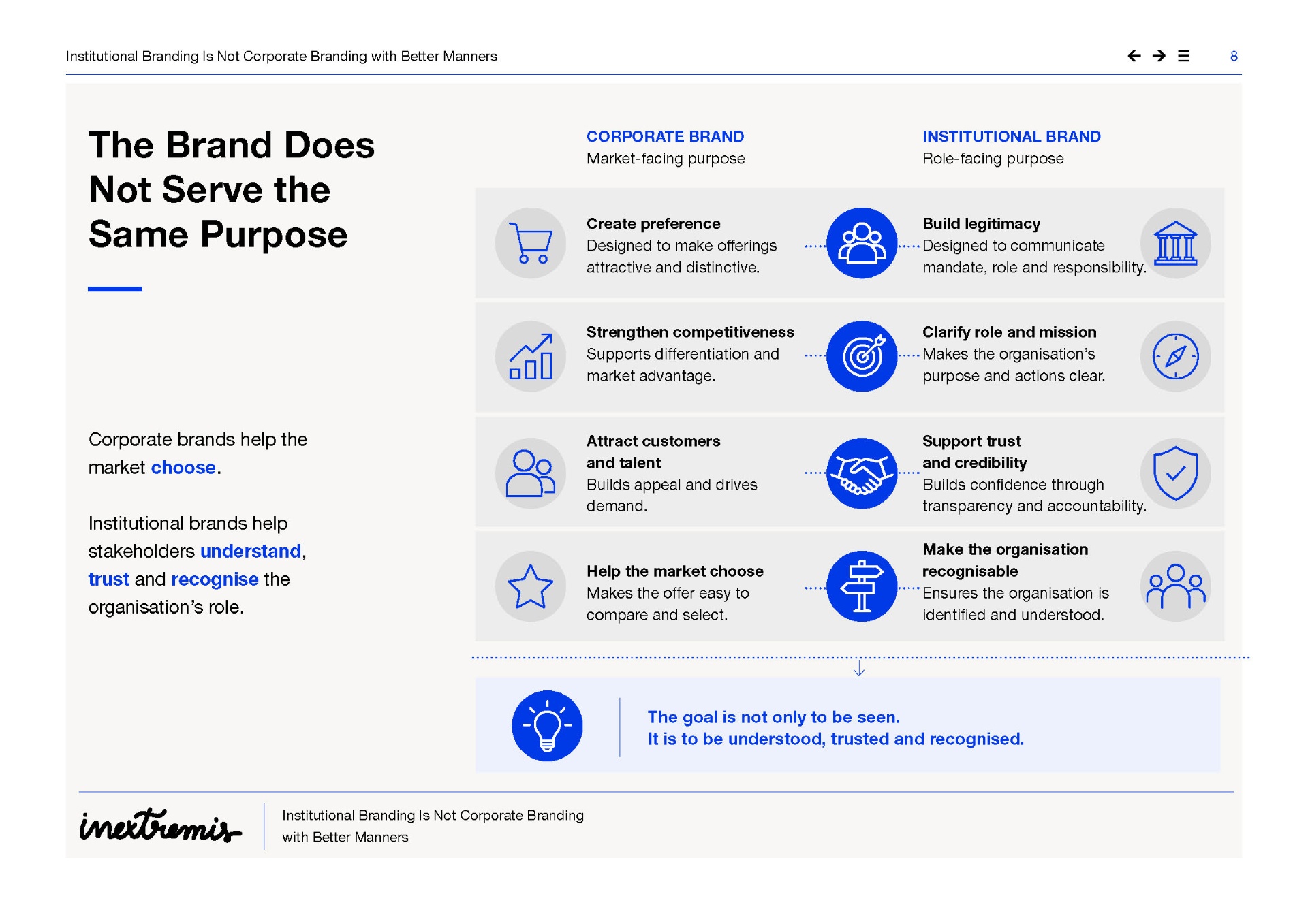
The first difference is the most fundamental: a corporate brand, a European institution and a European association do not expect the same thing from their brand.
An international corporate group often asks its brand to create preference, strengthen competitiveness, clarify its offer, attract customers, talent, investors or partners. Its brand helps it exist more powerfully in a competitive space. It must differentiate, appeal, simplify and be remembered. It must help the market choose.
A European institution or association operates according to a different logic. It does not seek, first of all, to be preferred like a company. It seeks to be understood, recognised as legitimate and perceived as trustworthy. Its brand is not primarily there to win against a competitor. It is there to make its role identifiable, its voice credible, its action acceptable and its presence coherent.
Corporate branding often starts from preference. Institutional branding must start from legitimacy.
In corporate branding, the central question is often: how can we make the brand more attractive and more distinctive? In institutional branding, the question should be: how can we make the organisation clearer, more legitimate and more solid in the fulfilment of its mission?
The official texts of the European institutions confirm this logic. The European Commission defines the purpose of its visual identity as giving the institution a recognisable image and a unified voice in its communications. The European Parliament presents its graphic guide as a tool designed to define the elements of its visual identity and strengthen the recognition of Parliament among the general public, its Members, its staff, the Member States and the other institutions of the European Union.
The vocabulary is revealing. It does not speak first of disruption, desirability or proprietary territory. It speaks of recognition, coherence, legibility and rules of use. In other words, the institution does not ask its brand to produce noise. It asks its brand to organise clarity.
The same nuance applies to European associations. They do not have the same source of legitimacy as a European institution. An institution draws its legitimacy from a public mandate, a legal framework, a service function or a regulatory role. A European association draws its legitimacy more from representation, coalition-building, expertise and its ability to give collective voice to a sector, community or cause at European level.
But in both cases, the brand is less about selling than about situating. It must answer simple and strategic questions: Who is speaking? On whose behalf? With what authority? Within what framework? For what mission? With what responsibility?
Institutional design cannot be judged only by its capacity to create an effect. It must clarify, prioritise, structure and establish stable recognition. It must create a presence strong enough to be identifiable, but controlled enough to remain compatible with the organisation's function.
In corporate branding, singularity can be a driving force. In institutional branding, singularity must be subordinated to appropriateness.
A logo, typeface, colour palette, grid, iconographic style or signature is not simply an expressive choice. These are signs of posture. They say how the organisation understands itself, and how it accepts being understood by others.
The first mistake leaders make is to believe that an institutional brand should first become more visible. It should first become more accurate.
What This Means in Practice
- ●Start every major communication piece with the mandate, not the message.
Before designing a report, campaign or event identity, clarify what role the organisation is playing.
- ●Make attribution visible early.
A reader should immediately understand who is speaking and in what capacity.
- ●Avoid campaign ideas that could belong to anyone.
The creative idea should be rooted in the organisation's institutional role, not just in a generic communication objective.
- ●Use templates to discipline the hierarchy.
Source, topic, status, date, audience and institutional signature should be easy to identify.