%20--%3e%3cpath%20d='M200.3,58.2c-2.5-2.5,1.1-6.8,3.3-4.2s-.9,6.5-3.3,4.2Z'/%3e%3ccircle%20cx='25.7'%20cy='49.3'%20r='2.4'/%3e%3cpath%20d='M87.2,63.9c0,0,.3.7.4.6,1.3-.9,3.4-4.2,4.8-4.4s3.2,1.2,2.8,3-5.6,5.5-6.7,7.5c0,.6,1.7,5.3,2.1,5.6,1.2,1.1,3.9-.8,4.7-1.8,3.4-4,6.1-10.1,8-15s2.1-6.4,3.6-9.4c-3.1-1.4-7.2-.7-9.7,1.5-1.5,1.2-3.2,4.4-5.3,1.5s3.2-6.2,5.3-7.2c3.8-1.8,7.7-1.6,11.7-.5,1.1-2,1.5-7.7,5-5.4s.3,4-.1,5.9-.2.4.1.6c4.3.7,9,2.7,13.1.6s2.2-1.9,3.2-3.8,3.1-2.4,4.2-.4-1.3,5.6-3.1,7c-5.8,4.8-12.8,2.4-19.4.9l-.4.2-5,13c-.6,2.2-.7,9.6.2,11.6,1.9,4.3,7.3-1.4,8.9-3.3s1.8-2.3,1.5-2.8c-4.3-2.6-4-10.8.9-12.5,5.7-2.1,7.3,4.9,5.7,9,2.6.3,8.2-5.3,10-1.8s-.5,2.6-1.1,4.1-1.6,6.5-.3,7.5,3.9-1.3,5.1-1.8c-.2-4.1,1.3-8.8,4.6-11.3s10-1.3,8.4,4.9-4.5,6.1-7.1,8.5c1.3.1,2.6-.7,3.6-1.5,3.5-2.8,8.1-10.8,12.4-11.6s4.6,2.9,4.8,5.3c2.4-4.9,8.9-7.6,12-1.8,2.3-2.8,6.2-5.7,9.6-2.9s0,10.1-1,14,0,.5.4.4c.8-.2,2.6-1.7,3.2-2.3,2.2-1.9,4.6-4.9,6.1-7.4s2.1-6.5,4.6-6c4.1.7.4,6.7-.2,9s-1.2,5.3,0,7.5c1.5.3,7.7-4.8,8.9-6.1s1.8-2,2-2.5c.6-1.2-.6-1.9-1.1-3-1-2.1-1.5-4.7-.2-6.8,1.9-3,5.7-2.3,7.1.8s.4,5.6.1,8.1l2.7,4.7c2.4-1.3,5.6-2.1,8.4-2.3s7.2-.3,8.5.8,1,3.6-1,4.1-5.2-.2-7.3,0-5.3.9-6,1.5,0,1.6.1,2.4c0,1.2.1,2.4-.4,3.5-1.8,3.4-7.4,3.1-8.4-.7s1-4.4,2.3-6.3l-1.5-3.1c-3.2,3.3-10.1,10.3-15.1,9.7s-4.5-3.5-4.4-6.2c-2.6,2.5-7.7,7.4-11.6,5.2s.7-11,.6-15.2c-.2-.2-2,1.2-2.2,1.4-2.3,2.1-3.8,5.4-5.1,8.2s-1.6,5-2.6,5.7c-1.7,1.2-3.5,0-3.8-1.9l2.7-9.7c0-.8.1-1.7,0-2.5s-.8-.4-1.3-.3c-3.3,1.2-5.8,10.8-7.8,13.5s-4.5,1.5-4.7-1,1.1-6.2,1.2-8.5,0-2.6,0-3.9c-4.6,3.6-9.4,13.2-16.1,12.5-1.4-.2-3-1.1-3.8-2.3-3.3,1.8-7.2,3.9-10.4.6s-2.2-6.1-1.8-9.1l-5.2,1.1c-2.7,4.8-9.3,12.9-15.6,10.4s-4.9-4.9-4.6-8c-2.1,2.5-3.3,5.3-6.4,6.7-5.4,2.5-9.1-.5-10.5-5.7-3.9,3.4-7.7,7.8-13.5,7.2s-3.9-1.6-5.3-3.2c-2.9,1.9-6.4,4.5-9.3,1.1s.8-12.1-1.1-16.6c-1.8-.3-5.1,6.4-5.9,7.8s-1.8,2.5-2.5,3.8-1.5,4.4-2.5,5c-1.4.9-4.2-.5-4.6-2.1l-.4-10.1-.5-3.6c-1.6,2.9-2.9,6-4.6,8.7s-5.9,8.3-8.6,9.1c-7.4,2.2-7.6-6.5-7.2-11.4s2.7-11.5,4.1-13.9,4-1.4,4.4.5-1.7,6-2.3,7.9-1.4,4.8-1.4,5.3v6.8l.4.4c.3,0,.6,0,.9,0,.9-.3,4.7-5.2,5.4-6.3,2.1-3.1,5.7-12.5,9.5-13.3,5.5-1.1,4.5,9.6,4.8,12.7l3.4-5.7c1.4-2.1,3.9-5.6,6.5-6,6.8-.9,6.6,7,6.4,11.6s-1.2,6.3-.3,6.4c.8-.1,4-2.2,4.2-2.8.4-.9.5-3.5.8-4.7,1.1-4.7,5.6-12.4,11.5-9.5s-.9,10.1-3.3,12.8-3.4,3.1-3.5,3.3c-.2.9,1.3,1.6,2.1,1.6,4,.2,8.5-5.3,11-8,.3-.7-.6-5.1-.6-6.4,0-2.1-.5-6.9,3-5.8s1.7,1.6,1.7,2.3c0,1.3-.2,3.3,0,4.5ZM70.8,68c.6-.2,2.9-3.5,2.7-3.7-1.4.6-2.5,2.3-2.7,3.7ZM142.8,70.2c.9-.1,3.4-3.5,3-4-1,0-3.4,3.4-3,4Z'/%3e%3c/svg%3e)
A Different Brand Logic
The branding of a European institution or a European association is still too often judged through criteria borrowed from the corporate world.
The branding of a European institution or a European association is still too often judged through criteria borrowed from the corporate world: visibility, differentiation, desirability, expressiveness and preference.
That is exactly where many poor diagnoses begin.
A European institution or association does not always suffer from a lack of impact. More often, it suffers from a lack of clarity, coherence, governance, precision in the way it formulates its mission, and robustness in the way its signs are deployed.
The difference is not cosmetic. It is not a matter of creative corporate brands on one side and well-behaved institutional brands on the other. It is a difference in brand function.
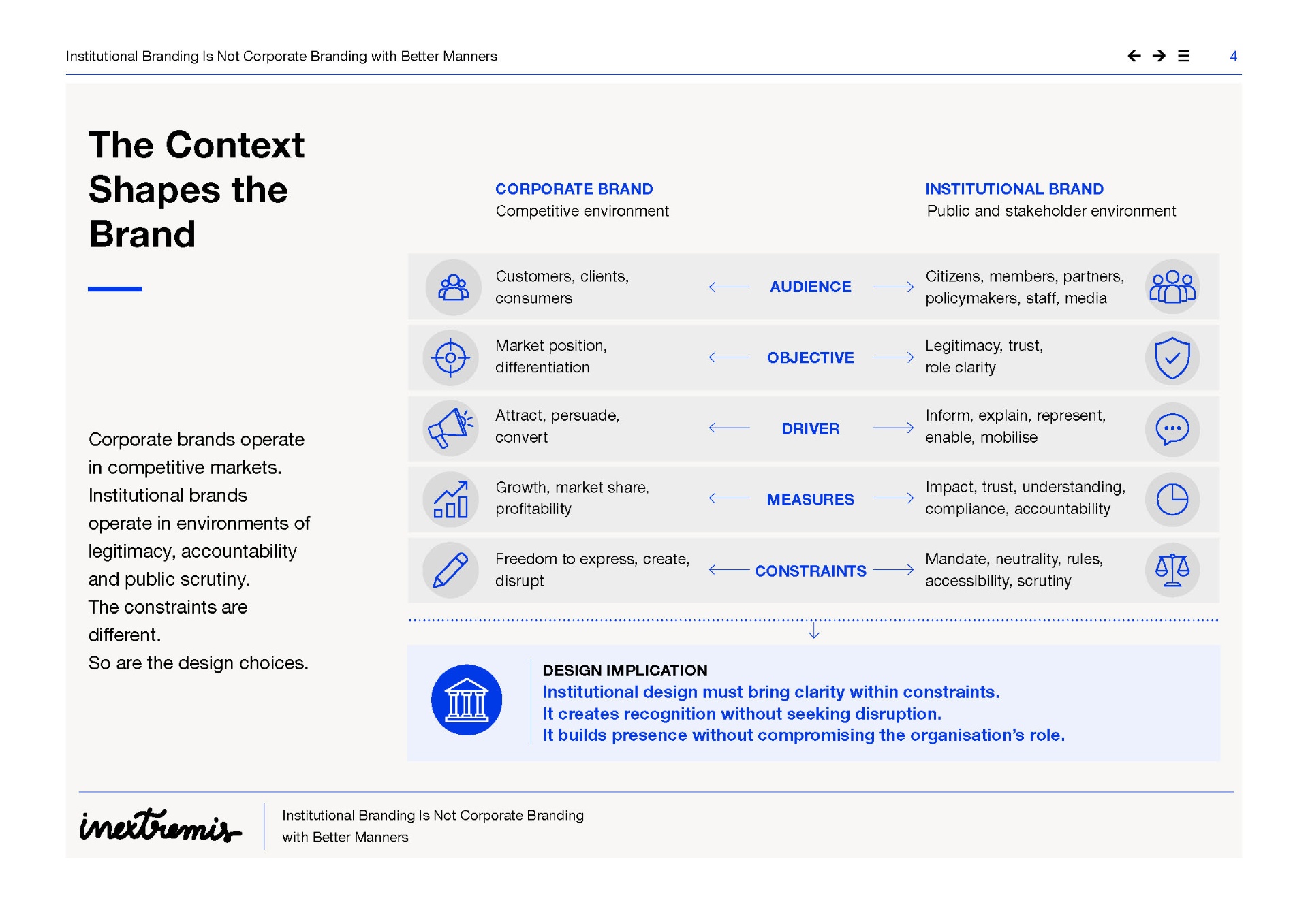
In the corporate world, the brand often acts as a central strategic asset, able to guide the organisation, its culture, its promise and its reputation. The literature on corporate brand orientation even describes the corporate brand as a centripetal force that guides the organisation and informs its strategy.
In the public and institutional sector, the logic changes. Research on public branding stresses that private-sector branding principles cannot simply be transferred to the public sector, precisely because public organisations face specific challenges of legitimacy, accountability, governance and stakeholder relationships.
This publication draws on more than 30 years of work with international institutions, European agencies and representative organisations, helping them give clearer form to complex mandates, collective voices and public responsibilities.
Institutional branding is not corporate branding made more cautious. It is a different exercise, governed by a different logic of legitimacy, governance, responsibility and design.
A strong institutional brand does not seek, first and foremost, to impress. It seeks to make an organisation more credible, more legible, more coherent, more governable and more able to hold up over time.