%20--%3e%3cpath%20d='M200.3,58.2c-2.5-2.5,1.1-6.8,3.3-4.2s-.9,6.5-3.3,4.2Z'/%3e%3ccircle%20cx='25.7'%20cy='49.3'%20r='2.4'/%3e%3cpath%20d='M87.2,63.9c0,0,.3.7.4.6,1.3-.9,3.4-4.2,4.8-4.4s3.2,1.2,2.8,3-5.6,5.5-6.7,7.5c0,.6,1.7,5.3,2.1,5.6,1.2,1.1,3.9-.8,4.7-1.8,3.4-4,6.1-10.1,8-15s2.1-6.4,3.6-9.4c-3.1-1.4-7.2-.7-9.7,1.5-1.5,1.2-3.2,4.4-5.3,1.5s3.2-6.2,5.3-7.2c3.8-1.8,7.7-1.6,11.7-.5,1.1-2,1.5-7.7,5-5.4s.3,4-.1,5.9-.2.4.1.6c4.3.7,9,2.7,13.1.6s2.2-1.9,3.2-3.8,3.1-2.4,4.2-.4-1.3,5.6-3.1,7c-5.8,4.8-12.8,2.4-19.4.9l-.4.2-5,13c-.6,2.2-.7,9.6.2,11.6,1.9,4.3,7.3-1.4,8.9-3.3s1.8-2.3,1.5-2.8c-4.3-2.6-4-10.8.9-12.5,5.7-2.1,7.3,4.9,5.7,9,2.6.3,8.2-5.3,10-1.8s-.5,2.6-1.1,4.1-1.6,6.5-.3,7.5,3.9-1.3,5.1-1.8c-.2-4.1,1.3-8.8,4.6-11.3s10-1.3,8.4,4.9-4.5,6.1-7.1,8.5c1.3.1,2.6-.7,3.6-1.5,3.5-2.8,8.1-10.8,12.4-11.6s4.6,2.9,4.8,5.3c2.4-4.9,8.9-7.6,12-1.8,2.3-2.8,6.2-5.7,9.6-2.9s0,10.1-1,14,0,.5.4.4c.8-.2,2.6-1.7,3.2-2.3,2.2-1.9,4.6-4.9,6.1-7.4s2.1-6.5,4.6-6c4.1.7.4,6.7-.2,9s-1.2,5.3,0,7.5c1.5.3,7.7-4.8,8.9-6.1s1.8-2,2-2.5c.6-1.2-.6-1.9-1.1-3-1-2.1-1.5-4.7-.2-6.8,1.9-3,5.7-2.3,7.1.8s.4,5.6.1,8.1l2.7,4.7c2.4-1.3,5.6-2.1,8.4-2.3s7.2-.3,8.5.8,1,3.6-1,4.1-5.2-.2-7.3,0-5.3.9-6,1.5,0,1.6.1,2.4c0,1.2.1,2.4-.4,3.5-1.8,3.4-7.4,3.1-8.4-.7s1-4.4,2.3-6.3l-1.5-3.1c-3.2,3.3-10.1,10.3-15.1,9.7s-4.5-3.5-4.4-6.2c-2.6,2.5-7.7,7.4-11.6,5.2s.7-11,.6-15.2c-.2-.2-2,1.2-2.2,1.4-2.3,2.1-3.8,5.4-5.1,8.2s-1.6,5-2.6,5.7c-1.7,1.2-3.5,0-3.8-1.9l2.7-9.7c0-.8.1-1.7,0-2.5s-.8-.4-1.3-.3c-3.3,1.2-5.8,10.8-7.8,13.5s-4.5,1.5-4.7-1,1.1-6.2,1.2-8.5,0-2.6,0-3.9c-4.6,3.6-9.4,13.2-16.1,12.5-1.4-.2-3-1.1-3.8-2.3-3.3,1.8-7.2,3.9-10.4.6s-2.2-6.1-1.8-9.1l-5.2,1.1c-2.7,4.8-9.3,12.9-15.6,10.4s-4.9-4.9-4.6-8c-2.1,2.5-3.3,5.3-6.4,6.7-5.4,2.5-9.1-.5-10.5-5.7-3.9,3.4-7.7,7.8-13.5,7.2s-3.9-1.6-5.3-3.2c-2.9,1.9-6.4,4.5-9.3,1.1s.8-12.1-1.1-16.6c-1.8-.3-5.1,6.4-5.9,7.8s-1.8,2.5-2.5,3.8-1.5,4.4-2.5,5c-1.4.9-4.2-.5-4.6-2.1l-.4-10.1-.5-3.6c-1.6,2.9-2.9,6-4.6,8.7s-5.9,8.3-8.6,9.1c-7.4,2.2-7.6-6.5-7.2-11.4s2.7-11.5,4.1-13.9,4-1.4,4.4.5-1.7,6-2.3,7.9-1.4,4.8-1.4,5.3v6.8l.4.4c.3,0,.6,0,.9,0,.9-.3,4.7-5.2,5.4-6.3,2.1-3.1,5.7-12.5,9.5-13.3,5.5-1.1,4.5,9.6,4.8,12.7l3.4-5.7c1.4-2.1,3.9-5.6,6.5-6,6.8-.9,6.6,7,6.4,11.6s-1.2,6.3-.3,6.4c.8-.1,4-2.2,4.2-2.8.4-.9.5-3.5.8-4.7,1.1-4.7,5.6-12.4,11.5-9.5s-.9,10.1-3.3,12.8-3.4,3.1-3.5,3.3c-.2.9,1.3,1.6,2.1,1.6,4,.2,8.5-5.3,11-8,.3-.7-.6-5.1-.6-6.4,0-2.1-.5-6.9,3-5.8s1.7,1.6,1.7,2.3c0,1.3-.2,3.3,0,4.5ZM70.8,68c.6-.2,2.9-3.5,2.7-3.7-1.4.6-2.5,2.3-2.7,3.7ZM142.8,70.2c.9-.1,3.4-3.5,3-4-1,0-3.4,3.4-3,4Z'/%3e%3c/svg%3e)
02. Legitimacy Is Not Built Like Preference
Corporate branding often seeks to make people prefer. Institutional branding first seeks to make people recognise the validity of a place, a voice and an action.
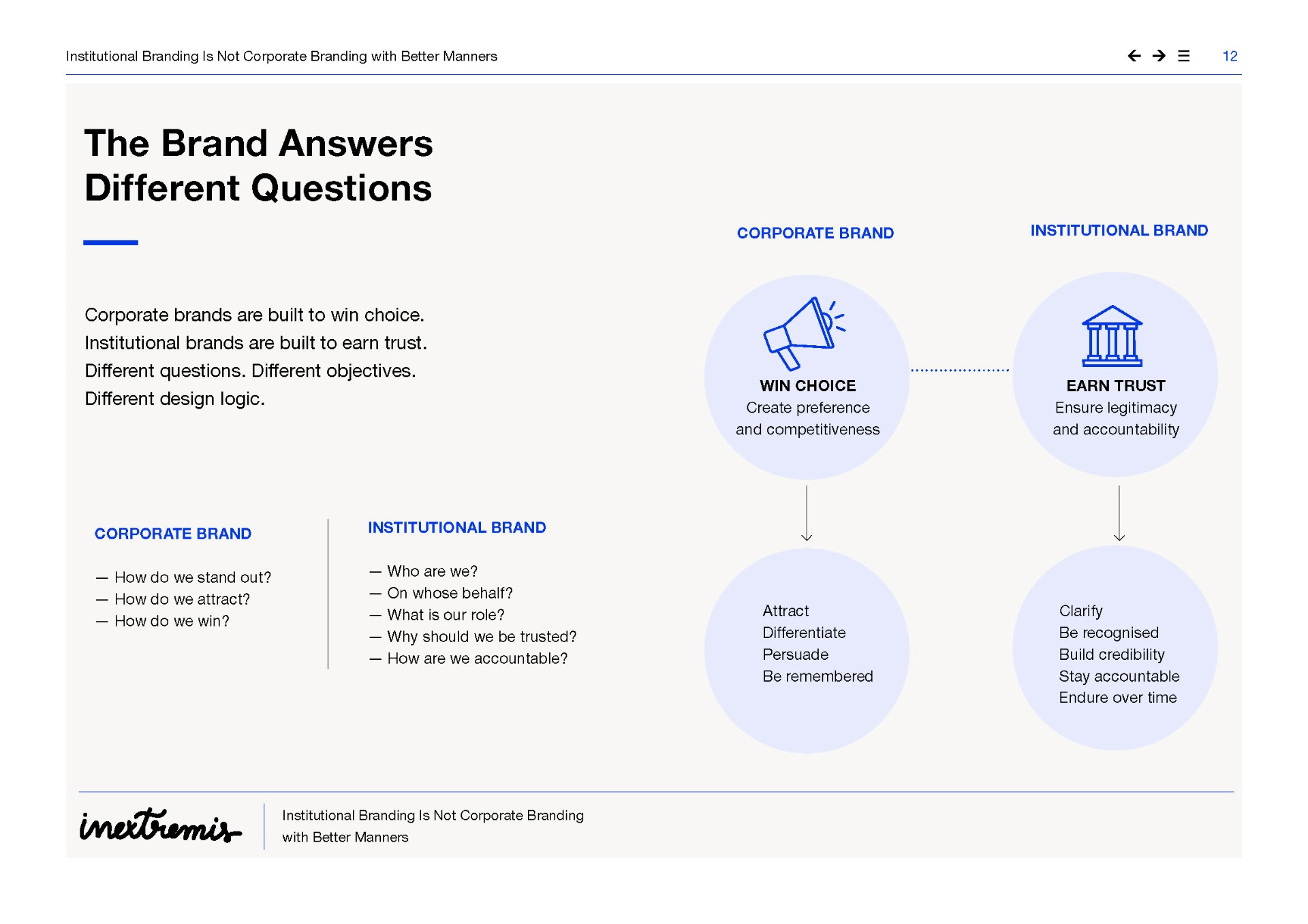
Corporate branding often seeks to make people prefer. Institutional branding first seeks to make people recognise the validity of a place, a voice and an action. This difference between preference and legitimacy is decisive.
Preference accepts intensification. A company can assert an ambitious promise, dramatise its difference, create an emotional territory, simplify its message strongly and seek to occupy a distinctive place in the public mind. In a market, that intensity can be an advantage. It reduces hesitation. It creates memorability. It accelerates choice.
Legitimacy requires a different discipline. A European institution or association cannot simply overpromise in order to emerge. It must assert without exaggerating, simplify without impoverishing, mobilise without instrumentalising, and become visible without giving the impression that it is placing itself at the centre.
This is where many institutional branding exercises go wrong. They apply to organisations of collective legitimacy reflexes designed for organisations of competition. They try to make the brand more appealing, more dynamic, more expressive, more "impactful". But they forget that, in the institutional world, a brand can become more visible while becoming less credible.
Research on public communication underlines this dilemma: public organisations depend on their legitimacy, and their communication must arbitrate between the pursuit of a favourable reputation and the need not to compromise that legitimacy.
An institution can communicate brilliantly and still lose authority if its posture feels excessive, self-promotional or poorly calibrated.
For a European institution, legitimacy rests on a mandate, a responsibility, continuity and an ability to act within a public framework. For a European association, it rests more on representativeness, expertise, member trust, the ability to articulate collective interests and the capacity to speak within a complex European space.
In both cases, the brand should not produce abstract seduction. It should support a voice that can be received as valid.
A corporate brand can promise transformation, performance, experience or a desirable future. An institutional brand must be more careful — not because it is weaker, but because its credibility depends on the fit between what it claims and what it can genuinely uphold.
It cannot rely on a powerful formula alone. It must be able to sustain that formula through evidence, use, behaviour and consistency over time.
An institutional tone does not need to be administrative, cold or distant. But it must remain credible. It can be clear, lively, human, committed and sometimes even emotional. But it must not feel manipulative, oversimplified or self-celebratory.
In a logic of preference, design can seek salience, contrast, desirability and ownership of a style. In a logic of legitimacy, it must first produce an impression of mastery, balance, seriousness and openness. It must support trust before seeking effect.
Good institutional design requires a higher intelligence of proportion. It must give presence without overplaying it. It must create recognition without locking the organisation into an authoritarian aesthetic. It must modernise without flattening. It must clarify without erasing complexity.
Preference can be accelerated through intensity. Legitimacy is built through appropriateness, evidence, coherence and time.
What This Means in Practice
- ●Create a claim-and-evidence check before publication.
Every strong statement should be supported by mandate, data, expertise, consultation, member input or documented action.
- ●Set tonal boundaries for campaigns.
Define what the brand can say with energy, and what it should never exaggerate.
- ●Use restraint where authority matters.
For sensitive topics, credibility often comes from precision, not from emotional intensity.
- ●Review headlines for overclaiming.
Replace broad promises with specific, defensible formulations.