%20--%3e%3cpath%20d='M200.3,58.2c-2.5-2.5,1.1-6.8,3.3-4.2s-.9,6.5-3.3,4.2Z'/%3e%3ccircle%20cx='25.7'%20cy='49.3'%20r='2.4'/%3e%3cpath%20d='M87.2,63.9c0,0,.3.7.4.6,1.3-.9,3.4-4.2,4.8-4.4s3.2,1.2,2.8,3-5.6,5.5-6.7,7.5c0,.6,1.7,5.3,2.1,5.6,1.2,1.1,3.9-.8,4.7-1.8,3.4-4,6.1-10.1,8-15s2.1-6.4,3.6-9.4c-3.1-1.4-7.2-.7-9.7,1.5-1.5,1.2-3.2,4.4-5.3,1.5s3.2-6.2,5.3-7.2c3.8-1.8,7.7-1.6,11.7-.5,1.1-2,1.5-7.7,5-5.4s.3,4-.1,5.9-.2.4.1.6c4.3.7,9,2.7,13.1.6s2.2-1.9,3.2-3.8,3.1-2.4,4.2-.4-1.3,5.6-3.1,7c-5.8,4.8-12.8,2.4-19.4.9l-.4.2-5,13c-.6,2.2-.7,9.6.2,11.6,1.9,4.3,7.3-1.4,8.9-3.3s1.8-2.3,1.5-2.8c-4.3-2.6-4-10.8.9-12.5,5.7-2.1,7.3,4.9,5.7,9,2.6.3,8.2-5.3,10-1.8s-.5,2.6-1.1,4.1-1.6,6.5-.3,7.5,3.9-1.3,5.1-1.8c-.2-4.1,1.3-8.8,4.6-11.3s10-1.3,8.4,4.9-4.5,6.1-7.1,8.5c1.3.1,2.6-.7,3.6-1.5,3.5-2.8,8.1-10.8,12.4-11.6s4.6,2.9,4.8,5.3c2.4-4.9,8.9-7.6,12-1.8,2.3-2.8,6.2-5.7,9.6-2.9s0,10.1-1,14,0,.5.4.4c.8-.2,2.6-1.7,3.2-2.3,2.2-1.9,4.6-4.9,6.1-7.4s2.1-6.5,4.6-6c4.1.7.4,6.7-.2,9s-1.2,5.3,0,7.5c1.5.3,7.7-4.8,8.9-6.1s1.8-2,2-2.5c.6-1.2-.6-1.9-1.1-3-1-2.1-1.5-4.7-.2-6.8,1.9-3,5.7-2.3,7.1.8s.4,5.6.1,8.1l2.7,4.7c2.4-1.3,5.6-2.1,8.4-2.3s7.2-.3,8.5.8,1,3.6-1,4.1-5.2-.2-7.3,0-5.3.9-6,1.5,0,1.6.1,2.4c0,1.2.1,2.4-.4,3.5-1.8,3.4-7.4,3.1-8.4-.7s1-4.4,2.3-6.3l-1.5-3.1c-3.2,3.3-10.1,10.3-15.1,9.7s-4.5-3.5-4.4-6.2c-2.6,2.5-7.7,7.4-11.6,5.2s.7-11,.6-15.2c-.2-.2-2,1.2-2.2,1.4-2.3,2.1-3.8,5.4-5.1,8.2s-1.6,5-2.6,5.7c-1.7,1.2-3.5,0-3.8-1.9l2.7-9.7c0-.8.1-1.7,0-2.5s-.8-.4-1.3-.3c-3.3,1.2-5.8,10.8-7.8,13.5s-4.5,1.5-4.7-1,1.1-6.2,1.2-8.5,0-2.6,0-3.9c-4.6,3.6-9.4,13.2-16.1,12.5-1.4-.2-3-1.1-3.8-2.3-3.3,1.8-7.2,3.9-10.4.6s-2.2-6.1-1.8-9.1l-5.2,1.1c-2.7,4.8-9.3,12.9-15.6,10.4s-4.9-4.9-4.6-8c-2.1,2.5-3.3,5.3-6.4,6.7-5.4,2.5-9.1-.5-10.5-5.7-3.9,3.4-7.7,7.8-13.5,7.2s-3.9-1.6-5.3-3.2c-2.9,1.9-6.4,4.5-9.3,1.1s.8-12.1-1.1-16.6c-1.8-.3-5.1,6.4-5.9,7.8s-1.8,2.5-2.5,3.8-1.5,4.4-2.5,5c-1.4.9-4.2-.5-4.6-2.1l-.4-10.1-.5-3.6c-1.6,2.9-2.9,6-4.6,8.7s-5.9,8.3-8.6,9.1c-7.4,2.2-7.6-6.5-7.2-11.4s2.7-11.5,4.1-13.9,4-1.4,4.4.5-1.7,6-2.3,7.9-1.4,4.8-1.4,5.3v6.8l.4.4c.3,0,.6,0,.9,0,.9-.3,4.7-5.2,5.4-6.3,2.1-3.1,5.7-12.5,9.5-13.3,5.5-1.1,4.5,9.6,4.8,12.7l3.4-5.7c1.4-2.1,3.9-5.6,6.5-6,6.8-.9,6.6,7,6.4,11.6s-1.2,6.3-.3,6.4c.8-.1,4-2.2,4.2-2.8.4-.9.5-3.5.8-4.7,1.1-4.7,5.6-12.4,11.5-9.5s-.9,10.1-3.3,12.8-3.4,3.1-3.5,3.3c-.2.9,1.3,1.6,2.1,1.6,4,.2,8.5-5.3,11-8,.3-.7-.6-5.1-.6-6.4,0-2.1-.5-6.9,3-5.8s1.7,1.6,1.7,2.3c0,1.3-.2,3.3,0,4.5ZM70.8,68c.6-.2,2.9-3.5,2.7-3.7-1.4.6-2.5,2.3-2.7,3.7ZM142.8,70.2c.9-.1,3.4-3.5,3-4-1,0-3.4,3.4-3,4Z'/%3e%3c/svg%3e)
03. Governance Changes the Very Nature of Branding
Governance does not come after institutional branding. It transforms its very nature.
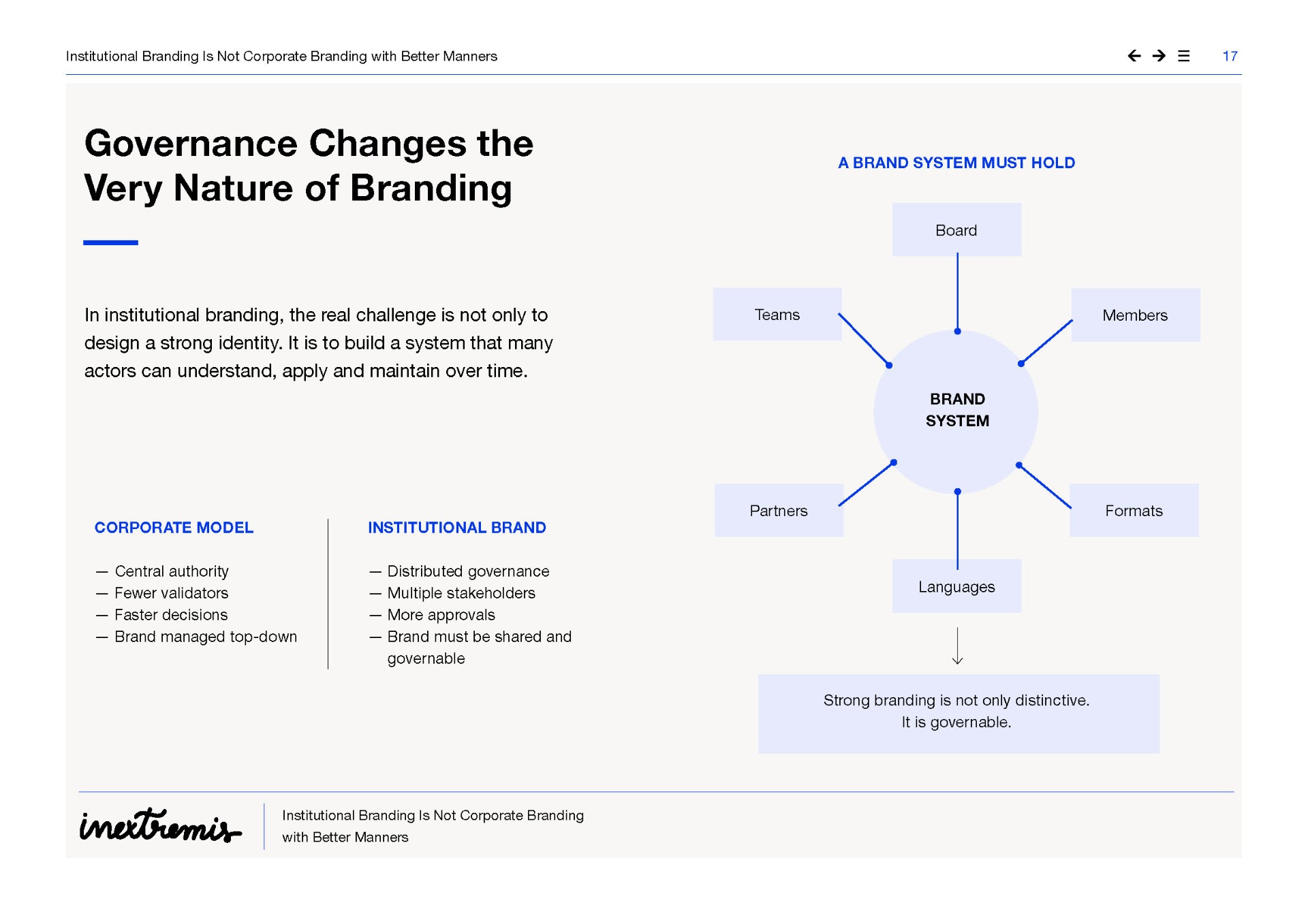
The third difference is less spectacular, but probably one of the most structurally important: governance does not come after institutional branding. It transforms its very nature.
In an international corporate group, the brand can be managed as a centralised strategic asset. Even when the organisation is complex, present in several countries or structured across multiple entities, the brand is often attached to a clear authority: executive management, brand leadership, communications leadership, the executive committee, sometimes the CEO.
In a European institution or association, governance is more distributed. An institution must deal with mandates, services, directorates, cabinets, legal obligations, political levels, languages, long timeframes and requirements of neutrality. A European association must deal with its members, board, secretariat, working groups, experts, partners, funders and sometimes different national or sectoral sensitivities.
The brand is not only what the organisation wants to project. It is what the organisation can get its own system of actors to accept, understand, apply and maintain.
This is where many rebrandings fail. They produce an appealing brand platform, an elegant visual identity, a well-written narrative. Then they discover that the system does not hold. Too many actors need to validate. Too many formats need to be covered. Too many contexts need to be anticipated. Too many teams need to produce. Too many partners need to co-sign. Too many exceptions become possible.
The problem is not that the brand lacks inspiration. The problem is that it was not designed to be governed.
A strong institutional brand must therefore be governable. It must be capable of being explained to a board, defended to members, applied by non-specialist teams, understood by partners, translated without distortion, deployed across multiple formats and maintained after a team or agency has moved on.
In corporate branding, design is often assessed on its capacity to express a personality, create recognition, produce desirability and strengthen differentiation. In institutional branding, it must also produce governance. The real question becomes: does this system allow several actors to produce coherent communications without reinventing the brand each time?
The European Commission's Europa Web Guide is presented as the official rulebook for its web presence. It covers editorial, legal, technical, visual and contractual dimensions, and all Commission websites must comply with these rules. Similarly, the Web Guide of the Publications Office of the European Union acts as the official reference for its web presence. These are not merely style guides. They are governance infrastructures.
For European associations, the stakes are just as high. An association must assert its own brand without overpowering the brands of its members. It must carry a common voice without seeming to confiscate representation. It must be visible as a European actor without becoming self-centred. Its brand must therefore organise a balance: strong enough to exist, open enough to represent, structured enough to be used.
It is not enough to define a logo, colour palette and typeface. Rules of architecture are needed. When should the main brand be used? When should a campaign identity be created? When is a variation allowed? How should members be integrated? How should partners be treated? How should co-funded projects be managed? How can the proliferation of sub-brands be avoided?
In the institutional world, coherence is not an aesthetic preference. It is a condition of credibility.
An institutional brand does not become strong because it has been decided at the top. It becomes strong because it can be understood, adopted, applied and maintained by a whole system of actors.
What This Means in Practice
- ●Map decision rights before designing the system.
Define who can approve identity, content, legal wording, partner visibility, campaign variations and exceptions.
- ●Create rules for exceptions.
The most important part of a brand system is often not the standard case, but what happens when a project asks for something different.
- ●Document what teams may adapt.
Separate fixed elements from flexible ones so people know where they have autonomy.
- ●Design the brand guide for actual users.
A board member, project manager, communications officer and external supplier should all be able to use it without interpretation.