%20--%3e%3cpath%20d='M200.3,58.2c-2.5-2.5,1.1-6.8,3.3-4.2s-.9,6.5-3.3,4.2Z'/%3e%3ccircle%20cx='25.7'%20cy='49.3'%20r='2.4'/%3e%3cpath%20d='M87.2,63.9c0,0,.3.7.4.6,1.3-.9,3.4-4.2,4.8-4.4s3.2,1.2,2.8,3-5.6,5.5-6.7,7.5c0,.6,1.7,5.3,2.1,5.6,1.2,1.1,3.9-.8,4.7-1.8,3.4-4,6.1-10.1,8-15s2.1-6.4,3.6-9.4c-3.1-1.4-7.2-.7-9.7,1.5-1.5,1.2-3.2,4.4-5.3,1.5s3.2-6.2,5.3-7.2c3.8-1.8,7.7-1.6,11.7-.5,1.1-2,1.5-7.7,5-5.4s.3,4-.1,5.9-.2.4.1.6c4.3.7,9,2.7,13.1.6s2.2-1.9,3.2-3.8,3.1-2.4,4.2-.4-1.3,5.6-3.1,7c-5.8,4.8-12.8,2.4-19.4.9l-.4.2-5,13c-.6,2.2-.7,9.6.2,11.6,1.9,4.3,7.3-1.4,8.9-3.3s1.8-2.3,1.5-2.8c-4.3-2.6-4-10.8.9-12.5,5.7-2.1,7.3,4.9,5.7,9,2.6.3,8.2-5.3,10-1.8s-.5,2.6-1.1,4.1-1.6,6.5-.3,7.5,3.9-1.3,5.1-1.8c-.2-4.1,1.3-8.8,4.6-11.3s10-1.3,8.4,4.9-4.5,6.1-7.1,8.5c1.3.1,2.6-.7,3.6-1.5,3.5-2.8,8.1-10.8,12.4-11.6s4.6,2.9,4.8,5.3c2.4-4.9,8.9-7.6,12-1.8,2.3-2.8,6.2-5.7,9.6-2.9s0,10.1-1,14,0,.5.4.4c.8-.2,2.6-1.7,3.2-2.3,2.2-1.9,4.6-4.9,6.1-7.4s2.1-6.5,4.6-6c4.1.7.4,6.7-.2,9s-1.2,5.3,0,7.5c1.5.3,7.7-4.8,8.9-6.1s1.8-2,2-2.5c.6-1.2-.6-1.9-1.1-3-1-2.1-1.5-4.7-.2-6.8,1.9-3,5.7-2.3,7.1.8s.4,5.6.1,8.1l2.7,4.7c2.4-1.3,5.6-2.1,8.4-2.3s7.2-.3,8.5.8,1,3.6-1,4.1-5.2-.2-7.3,0-5.3.9-6,1.5,0,1.6.1,2.4c0,1.2.1,2.4-.4,3.5-1.8,3.4-7.4,3.1-8.4-.7s1-4.4,2.3-6.3l-1.5-3.1c-3.2,3.3-10.1,10.3-15.1,9.7s-4.5-3.5-4.4-6.2c-2.6,2.5-7.7,7.4-11.6,5.2s.7-11,.6-15.2c-.2-.2-2,1.2-2.2,1.4-2.3,2.1-3.8,5.4-5.1,8.2s-1.6,5-2.6,5.7c-1.7,1.2-3.5,0-3.8-1.9l2.7-9.7c0-.8.1-1.7,0-2.5s-.8-.4-1.3-.3c-3.3,1.2-5.8,10.8-7.8,13.5s-4.5,1.5-4.7-1,1.1-6.2,1.2-8.5,0-2.6,0-3.9c-4.6,3.6-9.4,13.2-16.1,12.5-1.4-.2-3-1.1-3.8-2.3-3.3,1.8-7.2,3.9-10.4.6s-2.2-6.1-1.8-9.1l-5.2,1.1c-2.7,4.8-9.3,12.9-15.6,10.4s-4.9-4.9-4.6-8c-2.1,2.5-3.3,5.3-6.4,6.7-5.4,2.5-9.1-.5-10.5-5.7-3.9,3.4-7.7,7.8-13.5,7.2s-3.9-1.6-5.3-3.2c-2.9,1.9-6.4,4.5-9.3,1.1s.8-12.1-1.1-16.6c-1.8-.3-5.1,6.4-5.9,7.8s-1.8,2.5-2.5,3.8-1.5,4.4-2.5,5c-1.4.9-4.2-.5-4.6-2.1l-.4-10.1-.5-3.6c-1.6,2.9-2.9,6-4.6,8.7s-5.9,8.3-8.6,9.1c-7.4,2.2-7.6-6.5-7.2-11.4s2.7-11.5,4.1-13.9,4-1.4,4.4.5-1.7,6-2.3,7.9-1.4,4.8-1.4,5.3v6.8l.4.4c.3,0,.6,0,.9,0,.9-.3,4.7-5.2,5.4-6.3,2.1-3.1,5.7-12.5,9.5-13.3,5.5-1.1,4.5,9.6,4.8,12.7l3.4-5.7c1.4-2.1,3.9-5.6,6.5-6,6.8-.9,6.6,7,6.4,11.6s-1.2,6.3-.3,6.4c.8-.1,4-2.2,4.2-2.8.4-.9.5-3.5.8-4.7,1.1-4.7,5.6-12.4,11.5-9.5s-.9,10.1-3.3,12.8-3.4,3.1-3.5,3.3c-.2.9,1.3,1.6,2.1,1.6,4,.2,8.5-5.3,11-8,.3-.7-.6-5.1-.6-6.4,0-2.1-.5-6.9,3-5.8s1.7,1.6,1.7,2.3c0,1.3-.2,3.3,0,4.5ZM70.8,68c.6-.2,2.9-3.5,2.7-3.7-1.4.6-2.5,2.3-2.7,3.7ZM142.8,70.2c.9-.1,3.4-3.5,3-4-1,0-3.4,3.4-3,4Z'/%3e%3c/svg%3e)
07. The Success of an Institutional Brand Is Measured by Its Ability to Hold
An institutional brand does not succeed because it creates a moment. It succeeds because it creates continuity.
In the corporate world, a successful brand is often measured through visibility, preference, desirability, differentiation, reputational value or contribution to performance. But a European institution or association cannot be assessed only through that lens.
An institutional brand may become more visible and yet less solid. It may attract more attention and yet lose credibility. It may appear more modern and yet become less governable. It may produce a strong campaign while leaving behind a confused system.
In the institutional world, success is therefore not measured only by what the brand triggers at launch. It is measured by what it allows the organisation to sustain over time.
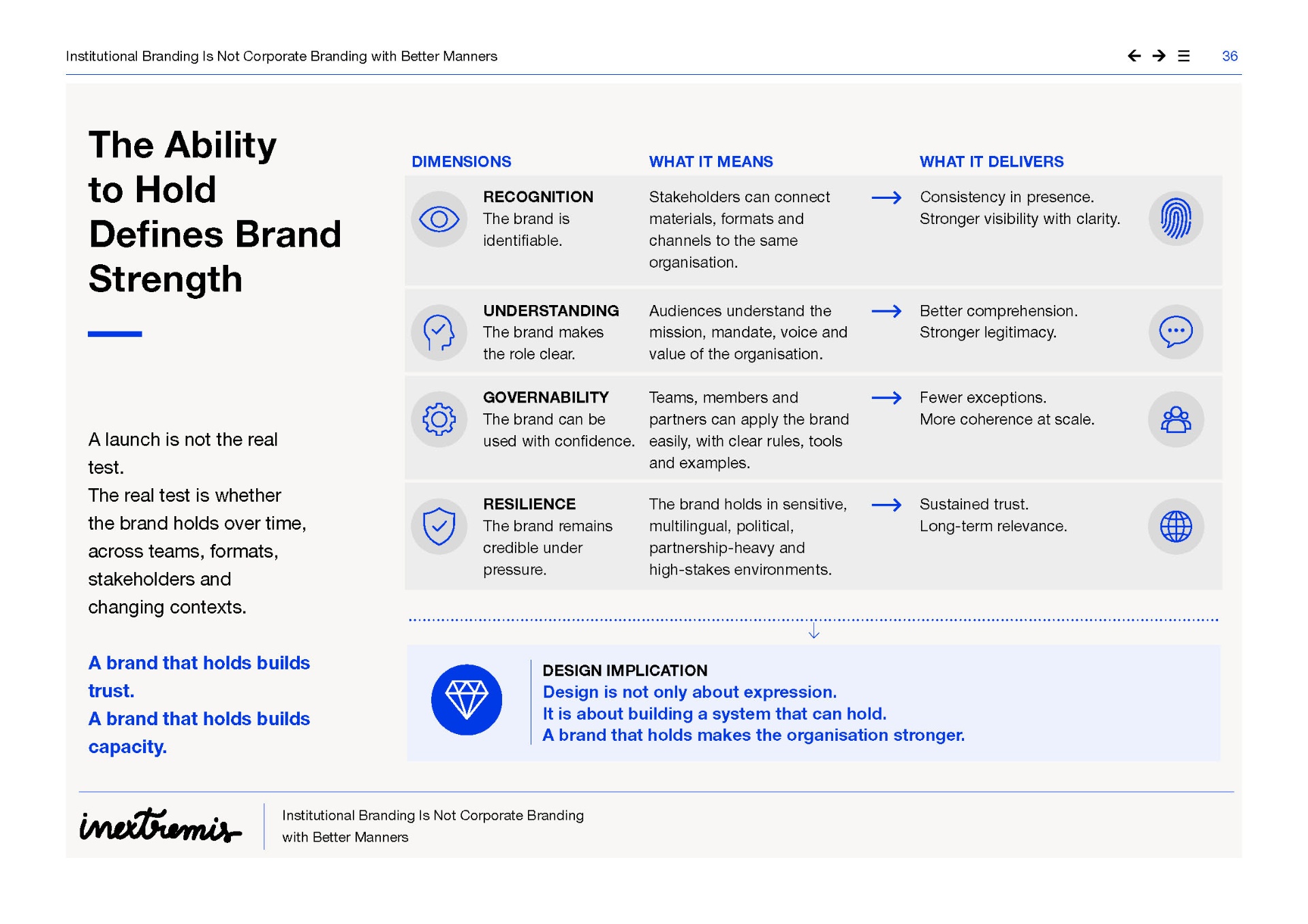
To hold means remaining recognisable despite the diversity of formats. Remaining credible when subjects become sensitive. Remaining coherent when several teams produce.
Remaining legible when several languages are involved. Remaining clear when partners multiply. Remaining accessible when content becomes complex. Remaining governable as the organisation evolves.
An institutional brand does not succeed because it creates a moment. It succeeds because it creates continuity. This continuity can be seen in ordinary uses.
A brand launch is often the most controlled moment: the materials are beautiful, the messages are calibrated, the art direction is intact. But the brand truly begins to be tested the next day. When a team must produce a presentation in a hurry. When a partner asks to add its logo. When a 120-page report must remain readable. When an event wants its own style. When a member adapts a template. When a campaign needs to be livelier without leaving the system.
That is when we know whether the brand holds. An institutional brand that holds produces a discreet but powerful effect: it reduces noise.
It reduces visual noise, because materials stop pulling in every direction. It reduces strategic noise, because messages connect more clearly to the mission. It reduces political noise, because roles and signatures are better prioritised. It reduces organisational noise, because teams know more clearly what to do. It reduces reputational noise, because the organisation appears more stable, more coherent and more responsible.
Four complementary criteria
The first family of criteria is recognition: is the organisation more identifiable, more memorable, more clearly attributable? The second is understanding: do audiences better understand its role, mission, voice and levels of action? The third is governability: do teams, members and partners know how to use the brand with less hesitation, fewer exceptions and less distortion? The fourth is resilience: does the brand retain its credibility in complex, sensitive, multilingual, partnership-based or technically constrained contexts?
These criteria do not replace visibility or engagement. They complement them where they are blind. A campaign can perform well on LinkedIn while weakening brand coherence. A new website can look more beautiful while being less accessible. A video can be widely viewed while establishing a tone that does not match the organisation's role. An identity can please the board while being impossible for teams to apply.
Institutional branding must be judged on its average quality, not only on its best cases.
Many organisations have a few remarkable materials: the flagship report, the major campaign, the launch video, the main website. But real perception is often built through the accumulation of ordinary materials: invitations, newsletters, slides, posts, notes, web pages, signage, factsheets, covers and event visuals. In the institutional world, a brand is often judged by its average execution.
Institutional branding reaches its highest level when it becomes obvious. Not invisible. Obvious. When every material seems naturally to belong to the organisation. When the voice is recognisable without being repetitive. When audiences understand more quickly. When partners know how to fit into the system. When leaders no longer need to reinvent the brand every time they speak. When design no longer tries to prove that it exists, but allows the organisation to exist more clearly.
A successful institutional brand does not merely look stronger. It makes the organisation genuinely stronger.
What This Means in Practice
- ●Evaluate ordinary materials, not only flagship ones.
Slides, invitations, factsheets, LinkedIn posts and newsletters reveal whether the brand really works.
- ●Track the number of exceptions.
If every project needs a special solution, the system is not holding.
- ●Review the brand after six months of use.
Look at what teams actually produced, not only at what the guidelines prescribed.
- ●Measure ease of use.
A strong institutional brand should reduce hesitation, rework, validation loops and inconsistent execution.